I had a conversation recently with a young man who is a faithful follower of Jesus, eager to grow as a Christian, and an avid reader. He told me that he reads no fiction. My initial reaction was to put on the full court press using every persuasive (and maybe pejorative) argument I could think of to convince him how wrong he was. Thankfully I realized the likely ineffectiveness–and potential unknindess–in this approach. The love of fiction, of great stories, is discovered not gained by polemics.
I am addressing this article to men in large part because I know dozens more men than women who say “I only read non-fiction books.” It seems to be a particular stance of males, and, I would argue, a particular weakness. It might be interesting to explore why so many men feel this way, but that is a different objective for a different writer on a different day.
With all that firmly in mind, my hope in this article is not to harass or even to actively persuade anyone to read stories, but rather to give reasons why stories are worth exploring–with the explicit hope that in so doing men might discover why they are worth reading. I believe a good story fills gaps left by even the best non-fiction. They are intended to accomplish different things and stir different parts of the heart and mind. That means fiction and non-fiction serve as complements, not rivals. So here are seven reasons why men should read more stories.
1) Good stories are true even if they are fiction.
Just because something didn’t really happen doesn’t mean a story about it is not deeply true. Truth is not limited to statements of facts. Truth is captured in reflecting deeper realities, communicating reality as God intends it to be. And that can be captured magnificently in fiction. In fact, often truth can be depicted more vividly in narrative than in even the most coherent, articulate series of propositions. Relationships can be true. Actions (or abstentions) can be true. Value systems can be true. Virtues and vices can be true. And all of this can happen in a world that doesn’t exist by characters from the imagination. The following points flesh this out (and yes, I realize there is more than a hint of irony in writing seven propositions to defend this point).
2) Stories make you want to be better.
The best stories leave the reader wanting to be better than he is – nobler, braver, humbler, gentler, more faithful. They are not manuals full of instructions; rather they introduce us to other universes which depict reality as it could be, for better and worse. When we read good stories we don’t come away with a list of to-dos that need implementing but rather a sense of how much better we could be, an aspiration rather than a duty. This is true even of stories that emphasize depravity. While reveling in evil is despicable, recognizing and commensurately loathing it is admirable.
3) Stories show, not just tell.
The way which stories make us want to be better is not through instruction. No good story conscientiously preaches to the reader. Such writing feels contrived and stilted. This is the shortcoming of so much Christian fiction. Rather, the best stories do what I wrote above, they create a universe in which lessons, characteristics, truths, and inspirations are made to look and feel real (even if these universes are populated with talking animals, dragons, or super heroes). Rather than being instructive or intrusive such stories feel palpably desirable. Because of how real they are, it is only a small step to take those truths and characteristics and recognize their place in our own lives. And because they are not taught with a specific style, stories are “one-size-fits-most” rather than applying only to a certain demographic or learning style.
4) Stories give role models and anti-role models.
Every parent knows that children learn best by imitating. Somehow we forget this when we become adults trying to learn, though. Stories create a context for imitation, or at least inspiration. A story’s characters are the ones doing the showing. They function either as role models or as anti-role models, those to emulate or to avoid. The relationship between reader and character, if the character is written well, can range from pure adoration to utter loathing. Often, though, it is somewhere in between because the character is human and has both good and bad qualities. As we relate to these characters, though, we get to determine what about them is to be imitated and what is not.
5) Stories don’t have to be about good to be good.
It is a mistake to think that we can only learn from stories that explicitly promote virtue. Often the stories that depict a void of virtue are just as powerful. Loathsome characters, despicable decisions, and vapid or heinous worldviews can make us want to be better just as much as virtuous and moral ones. The danger in this, of course, is that we become confused and deceived into thinking that evil is appealing (as we are so prone to do), so it is best to read far more of virtue than of vice. But do not discard all depictions of evil as useless, for they are remarkably effective at setting a backdrop against which good can shine.
6) Stories express.
Men are often inhibited in our expressions of emotion. We can struggle to know when and how to give voice to our passions, both positive and negative. Stories give both examples and lessons in how to do this. They show the benefit to being open and the harm that comes from locking feelings and passions away. But they do so in a palatable way by showing it in the lives of others. You will know it when you find it as your heart and emotions align with whatever is being said or done in the story. And, since there are millions of stories in this world, ranging from Shakespearian to Orwellian, we can most certainly find one that expresses in a way that suits us.
7) Stories get under the surface.
No one should ever describe the characters of David Baldacci or Clive Cussler as “deep” or “human.” They are caricatures, not characters – mere anthropomorphic plot devices. (Which is not to say that those author’s books aren’t enjoyable; they just aren’t deep or meaningful in any way. They are cotton candy and popcorn–tasty nothingness.) The best characters are those written deeply, as a whole person. It is these characters with whom we can feel like we relate as we read. We discover their gifts and weaknesses, their virtues and shortcomings. It is through this sort of depth that the universe I was describing earlier comes to life as a multi-dimensional, real, relatable thing. And it is in such a universe that we see under the skin of the characters and get a sense – whether or not it is explicitly written – of good, bad, noble, cowardly, and imitable. I have yet to read a prescriptive teaching book for men that effectively that creates the same sense.
10 Novels (and Novelists) I Would Recommend to Any Man
I present this list in no particular order, nor would I argue that these are the ten greatest novels of all time, as if such a thing could be determined. Rather, it is a collection of novels I love and think any man would benefit from reading. In several cases I was forced to choose between several excellent novels by the author (especially Conroy, McCarthy, Enger, and Backman) when I could have easily recommended all their works. I have read all of these multiple times, with the exception of The Brothers K. That is simply because I fear that the impact it made on me when I read it fifteen years ago would somehow diminish if I open it again. That said, I will likely re-read it in the next year to see how it lands with a man in his 40s instead of his 20s. If you have not read these books, I encourage you to do so. If there is another novel you’re eager to delve into, go for it. I simply encourage you to enter the world of great stories.
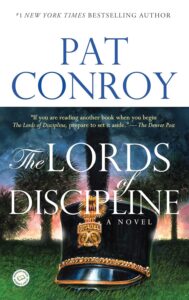
The Lords of Discipline by Pat Conroy
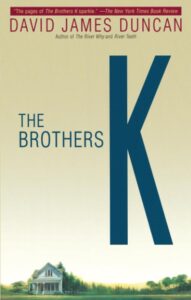
The Brothers K by David James Duncan
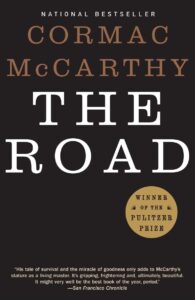
The Road by Cormac McCarthy
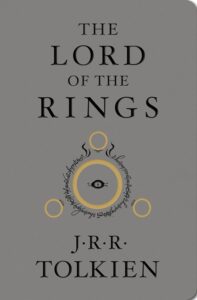
The Lord of the Rings by J.R.R. Tolkien
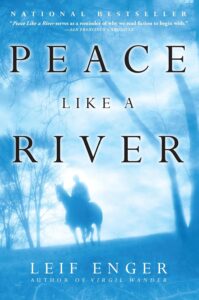
Peace Like a River by Leif Enger
East of Eden by John Steinbeck

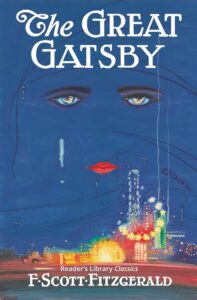
The Great Gatsby by F. Scott Fitzgerald
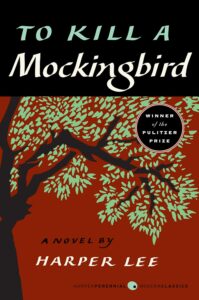
To Kill a Mockingbird by Harper Lee
My Friends by Frederik Backman

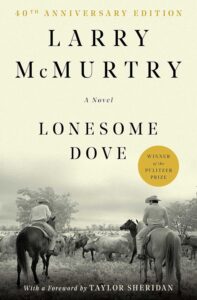
Lonesome Dove by Larry McMurtry